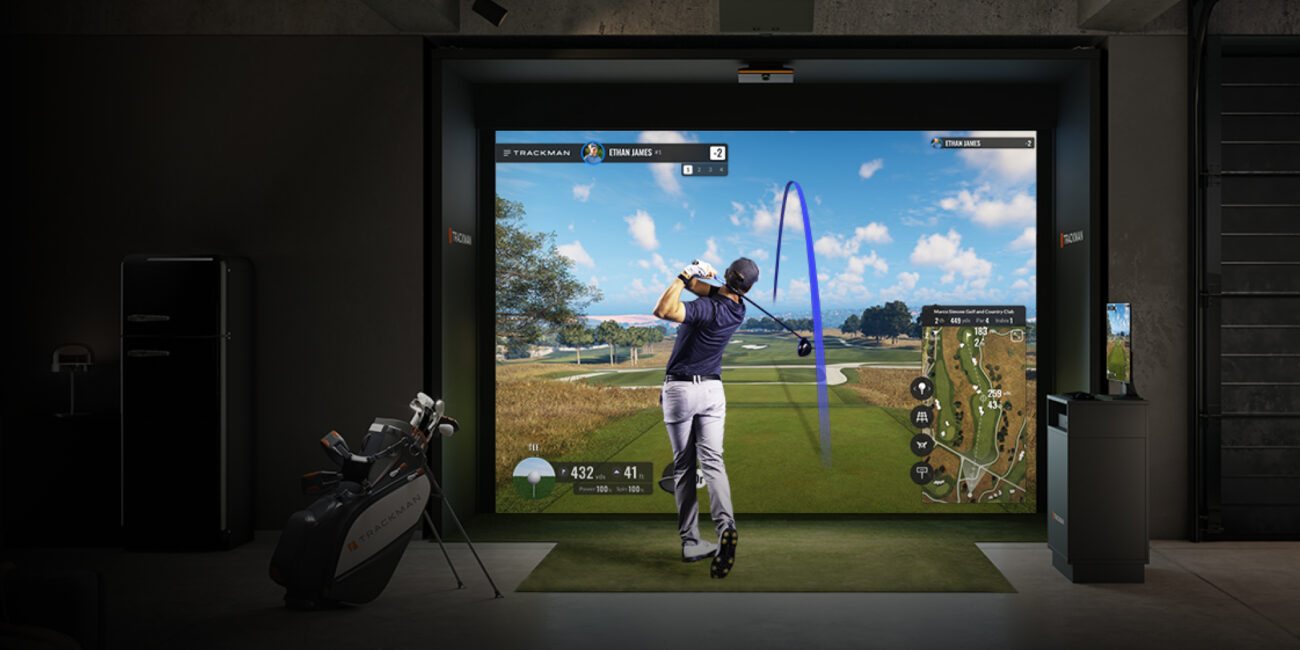
If you’ve ever stepped into an indoor golf lounge or tried virtual golf for the first time, you’ve probably asked yourself the same question every golfer does: Is this actually accurate? Can a simulator really tell me how far I hit my driver, what my spin rate is, or whether that slice is my fault, or the tech’s?
Short answer: yes, modern indoor golf simulators are highly accurate, and they’re getting better every year. But the why behind that accuracy (and improvement) is where things get interesting.
How Indoor Golf Simulators Measure Your Shot
At the core of every high-end indoor golf simulator is a launch monitor. These systems use a combination of radar technology, high-speed cameras, or both to track what happens during impact.
Radar-based systems (like those used by TrackMan) follow the ball from the moment it’s struck, measuring key data points such as:
- Ball speed
- Launch angle
- Spin rate
- Carry distance
- Total distance
Camera-based systems focus on ultra-fast image capture at impact, tracking club path, face angle, and contact location. When these two approaches are combined,as many modern simulators do, you get a shockingly precise picture of your swing and ball flight.
In premium Indoor Golf setups, the margin of error is often within 1–2% of real-world results. That’s accurate enough that PGA professionals, college golf programs, and elite instructors rely on these simulators daily for training.
Why Indoor Golf Accuracy Has Improved So Much
Indoor golf simulators today are not the same machines people tried 10–15 years ago. Back then, systems relied more heavily on algorithms and estimated ball flight. Now, improvement comes from three major advancements:
1. Better Sensors and Hardware
Modern radar systems operate at much higher frequencies, allowing them to track the ball more precisely in a shorter space, perfect for indoor environments. High-speed cameras can capture thousands of frames per second, freezing impact in ways the human eye never could.
2. Smarter Software and Data Modeling
This is where things really shine. Today’s simulators use massive datasets collected from millions of real golf shots. Machine learning helps refine ball-flight models, making simulated outcomes feel more realistic across different clubs, swing speeds, and player types.
As more people play virtual golf worldwide, the systems continue to “learn,” improving accuracy over time rather than staying static.
3. Improved Indoor Environments
Modern Indoor Golf facilities are carefully calibrated. Factors like ceiling height, hitting distance, lighting, and screen material all matter. High-end simulators are tuned specifically for these conditions, reducing misreads and inconsistencies that used to plague older systems.
Realism Beyond Distance: Spin, Shape, and Feel
Accuracy isn’t just about how far the ball goes. What truly sets modern virtual golf apart is how well simulators capture shot shape and behavior. A pull hook looks like a pull hook. A high, soft wedge lands and stops. A low spinner checks and releases.
This realism is why indoor golf has become a trusted tool not only for entertainment, but for serious improvement. Golfers can practice with confidence knowing the feedback they’re receiving is legitimate, and transferable to the course.
Why This Matters for Golfers Today
Indoor Golf isn’t just a cold-weather backup anymore, it’s a year-round training and entertainment option that continues to evolve. As technology improves, simulators are becoming:
- More accurate
- More immersive
- More useful for real improvement
Whether you’re dialing in yardages, fixing a miss, or just enjoying a round with friends, virtual golf is no longer a compromise,it’s a legitimate way to play the game.